The world of technology is moving toward a cable-free future, Qi2 Wireless Charging and the latest milestone in this journey is the introduction of the Qi2 standard. For years, users struggled with slow charging speeds and the frustrating “sweet spot” problem—where a slight misalignment on a charging pad meant waking up to a dead battery. However, with the emergence of Qi2 wireless charging alaikas, these issues are becoming a thing of the past. Developed by the Wireless Power Consortium (WPC), Qi2 is not just a minor update; it is a complete overhaul of how we perceive and use wireless power.
What Makes Qi2 Different?
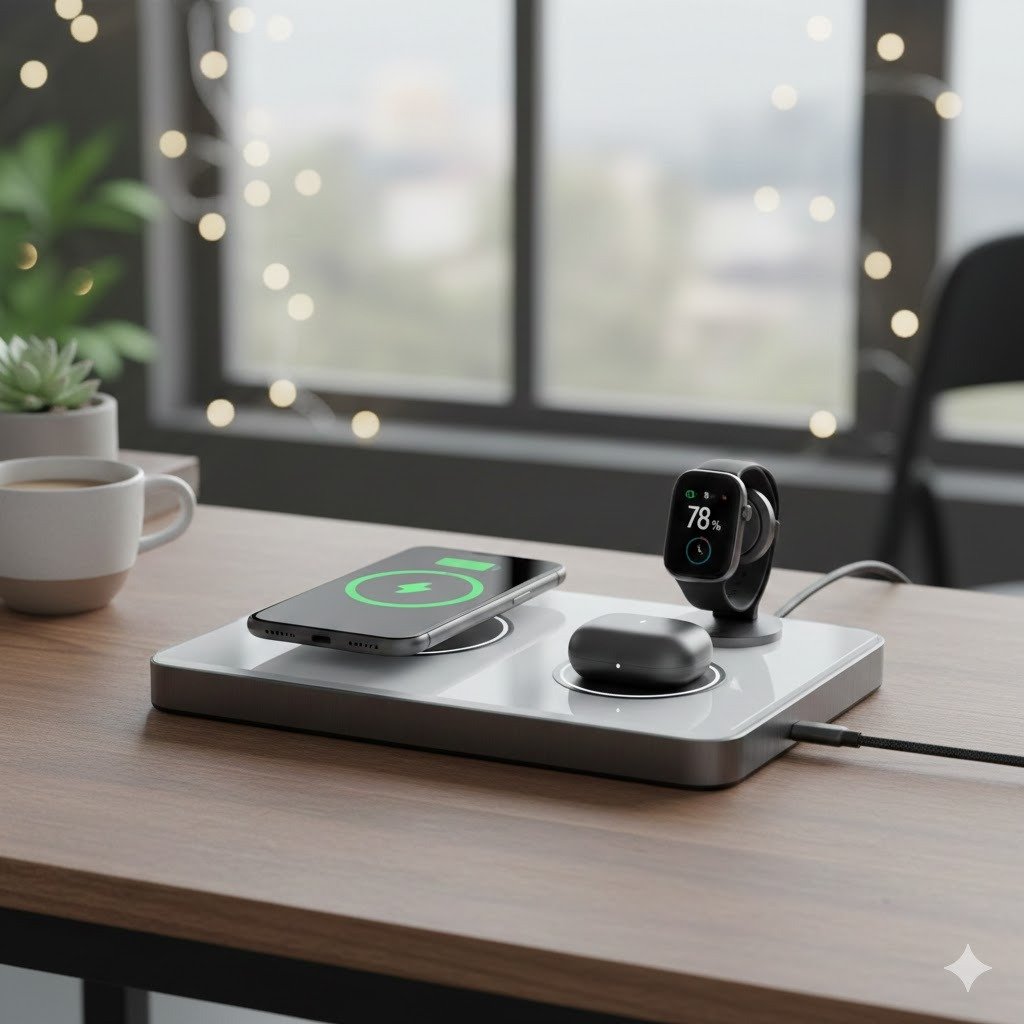
At its core, Qi2 incorporates a Magnetic Power Profile (MPP). If this sounds familiar, it is because the technology was heavily inspired by Apple’s MagSafe. By using a ring of magnets, Qi2 ensures that the charging coils in your phone and the charger are perfectly aligned every single time. This precision does more than just offer a satisfying “click”; it maximizes energy transfer and significantly reduces heat generation, which is the primary enemy of battery longevity.
When we discuss Qi2 wireless charging alaikas, we are looking at a universal standard. Unlike previous iterations where Android and iPhone users had to rely on different ecosystems for fast charging, Qi2 aims to bridge that gap. This means a single high-quality charger can now power a flagship Samsung, a Google Pixel, or an iPhone at optimal speeds.
Efficiency and Speed
One of the standout features of this new standard is the jump in wattage. While the original Qi standard often plateaued at 5W or 7.5W for many third-party chargers, Qi2 starts at a solid 15W. In more recent developments like Qi2.2, we are seeing speeds climb even higher, making wireless charging a viable alternative to traditional wired USB-C cables for the average user.
To learn more about the technical specifications and compatible devices, you can visit https://www.nearme-search.co.uk/qi2-wireless-charging-alaikas/.
The Impact on Battery Health
Many users worry that wireless charging degrades batteries faster due to heat. Qi2 addresses this directly through its magnetic alignment. Because the coils are perfectly centered, less energy is wasted as heat. Modern Qi2 chargers also include sophisticated thermal management systems that throttle power if the device gets too warm, ensuring that your expensive smartphone remains in peak condition for years.
Why Qi2 Wireless Charging Alaikas is the Ultimate Upgrade for Android and iPhone Users
If you have ever used a first-generation wireless charger, you know the struggle. You place your phone down, see the charging icon, and walk away—only to realize later that it stopped charging because it shifted by a millimeter. The introduction of Qi2 wireless charging alaikas solves this fundamental flaw by introducing a magnetic locking mechanism that guarantees a perfect connection.
The End of the “Alignment Struggle”
The primary reason to switch to Qi2 wireless charging alaikas is reliability. Traditional Qi chargers rely on the user to guess where the internal coils are located. If the alignment is off, the efficiency drops drastically, often resulting in more heat than actual power. Qi2 uses a ring of magnets to “snap” the device into the exact position required for a 100% efficient transfer. This is particularly useful for people who charge their phones in the dark or while driving, where precise placement is difficult.